

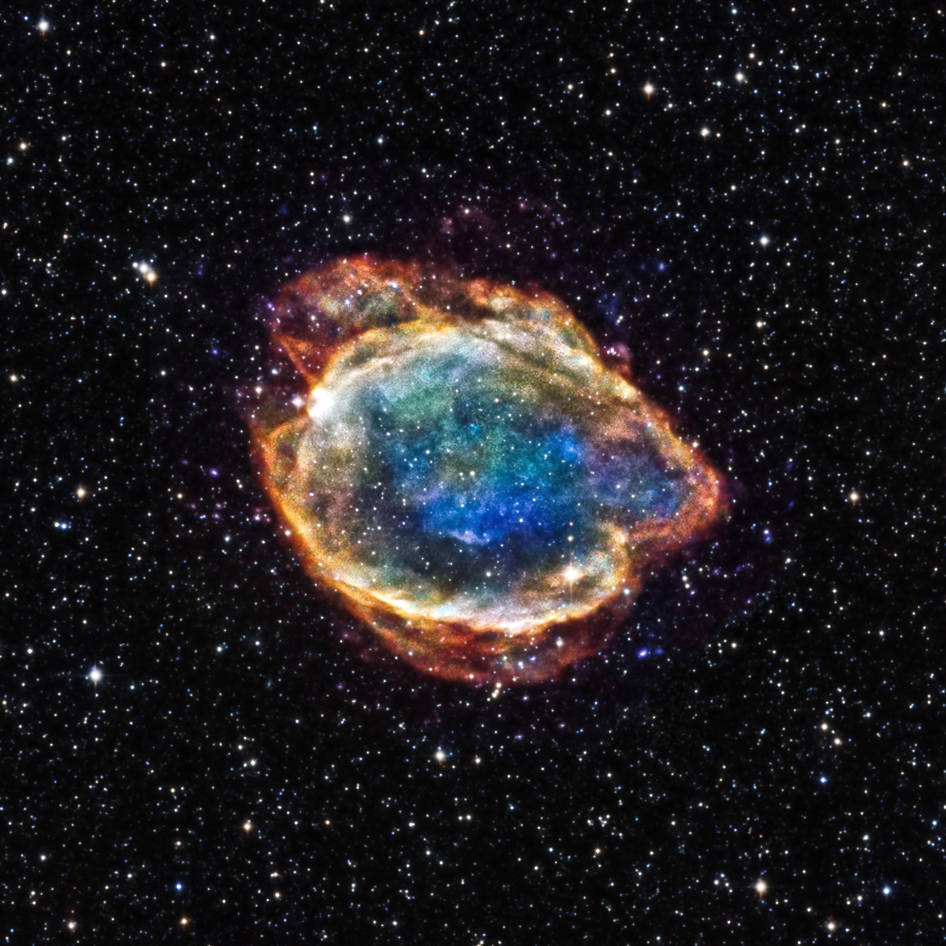
Type 1a Supernovae
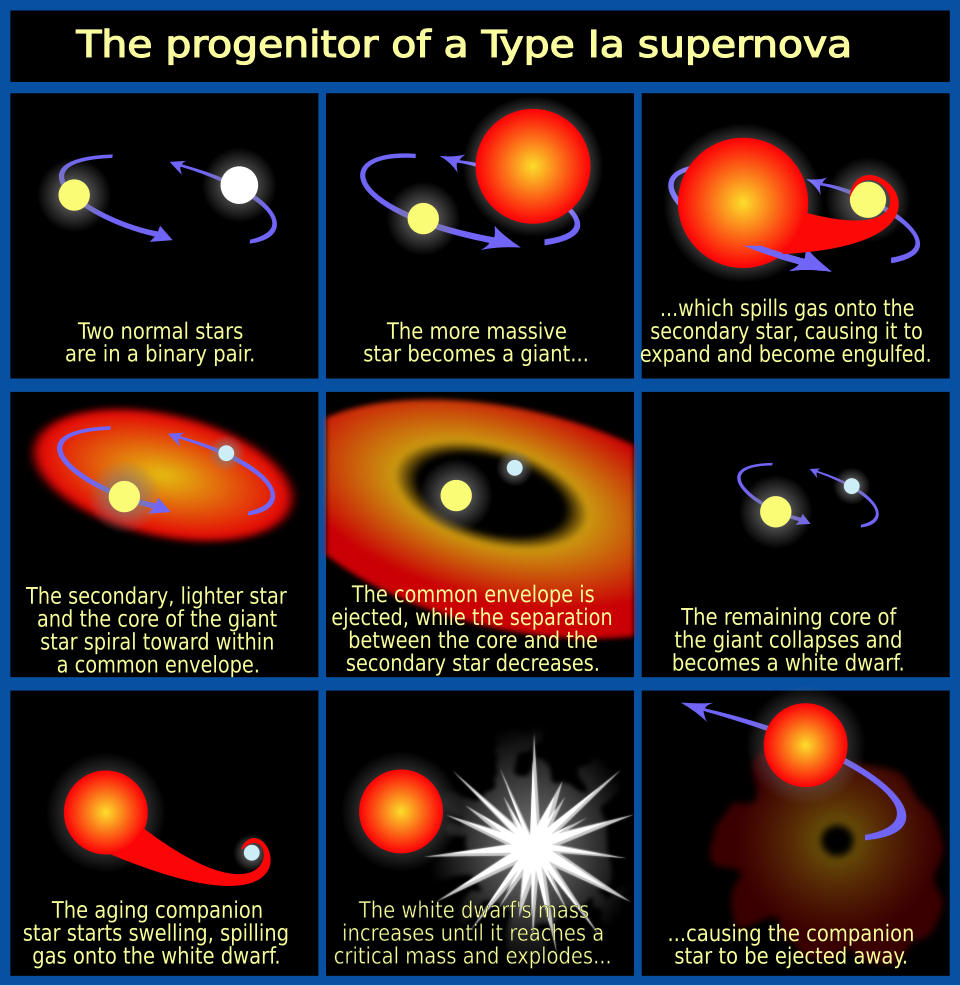
Type 1a Supernova’s are supernovas occurring in binary star systems, in which one of the stars is a white dwarf.
Essentially, what happens in these binary systems, is that when a carbon-oxygen white dwarf star, accumulates matter, it has a specific limit where the white dwarf will catastrophically implode. This is known as the Chandraeskhar limit, and occurs at roughly 1.44 M☉ (Solar Mass).
Because these supernovae are so reliable – they always implode at roughly the same mass, and emit roughly the same peak brightness – they are excellent for measuring cosmic distance. Within a few seconds of reaching the point that carbon fusion turns to nuclear fusion, a substantial fraction of the matter in the white dwarf undergoes a runaway reaction, releasing enough energy (1×1044 J {100000000000000000000000000000000000000000000}) to unbind the star in a supernova explosion.

Why are they so useful?
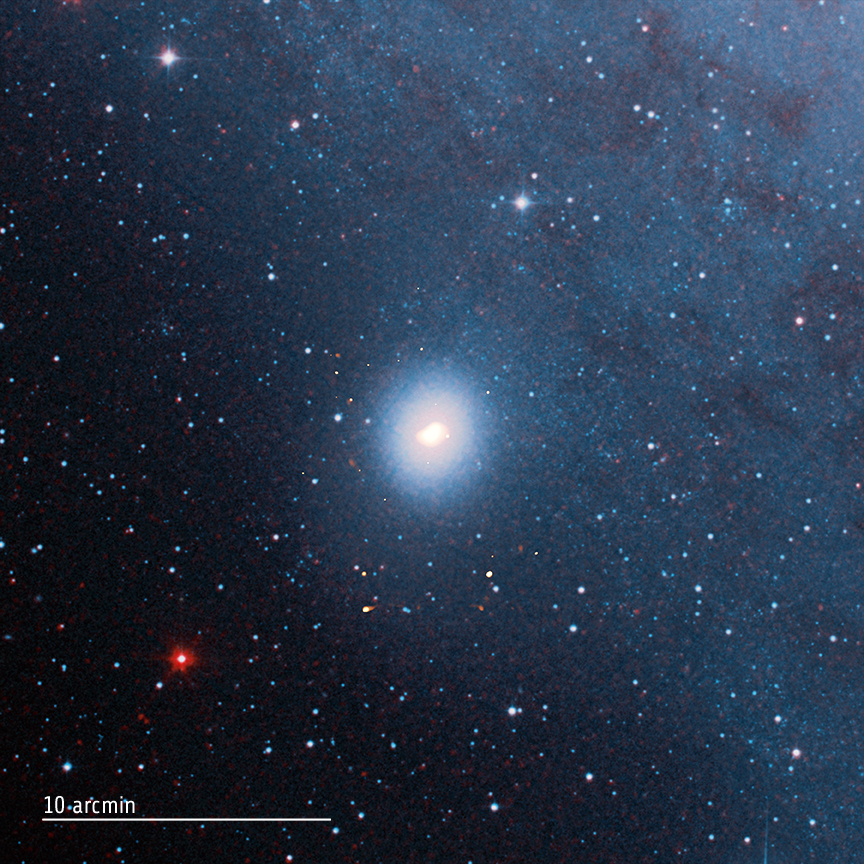
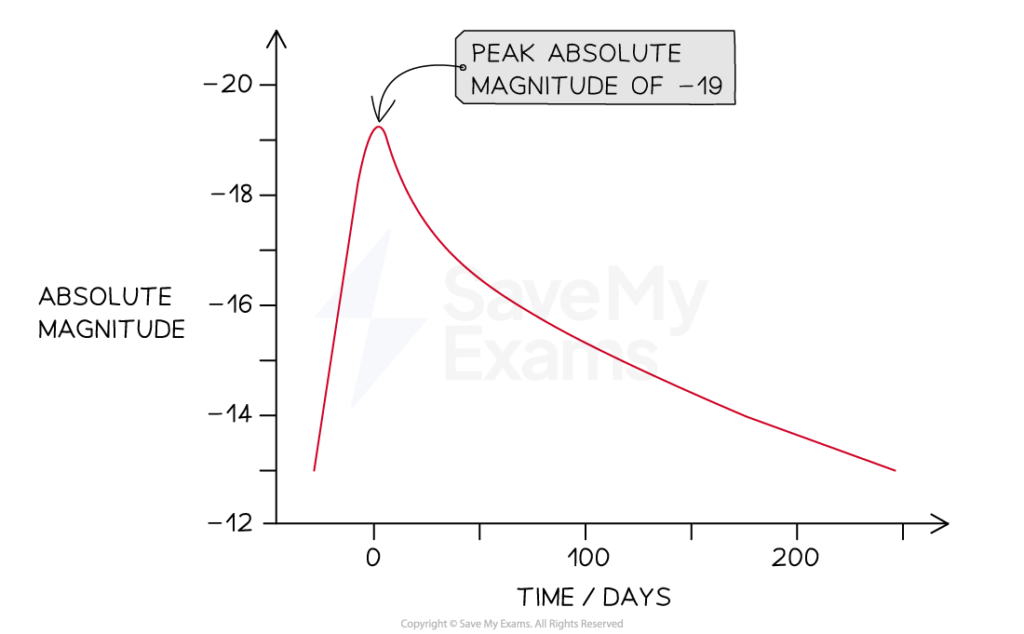
As mentioned earlier, Type 1a Supernovae are incredibly reliable and predictable events. Because of this, we use them to measure distance in space, where we have defined them as a method of a Standard Candle. Because they always have the same shape, and reach the same absolute magnitude, they can be used in a formula to calculate the distance. Due to their brightness, it makes them useful for measuring the distance to even the furthest galaxies.
Leave a Reply