


Salyut-3 Station
The Salyut-3 was the first spacecraft to fire a auto-cannon in space.
On the 25th June, 1974, the Salyut-3 station was successfully launched into space by the Soviet Union. It was the second Almaz military space station, (Known as Almaz 2 by the Soviet military), and the first station of it’s type to successfully stay in orbit. The Salyut name was an attempt by the Soviets to disguise it’s true military nature.
Because of this, quite a few details are still unknown about the Salyut-3 station, but enough was known that it contained multiple cameras that could observe the Earth, and carried onboard, a 23mm auto-cannon, likely to be the Rikhter R-23 aircraft auto-cannon, as claimed by one of the Cosmonauts who visited the station.
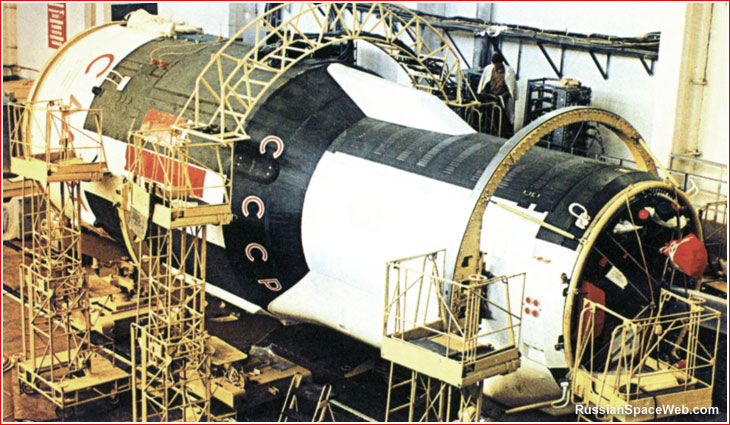
The Station – Salyut 3
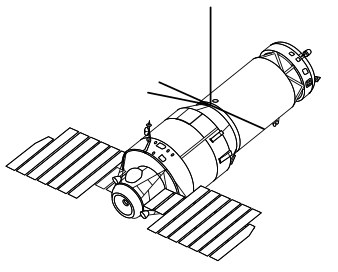
The Salyut 3 consisted of an airlock chamber, a large-diameter work compartment, and a small-diameter living compartment, giving a total habitable volume of 90 cubic metres, or 3200 cubic feet. It had 2 solar arrays, 1 docking port, and two main engines which could produce 3.9Kn of thrust.
It came equipped with a shower, a standing sleeping station, and a foldaway bed. The floor would be covered with Velcro to assist the cosmonauts to move around the station. Some of the available entertainment on Salyut 3 included, a magnetic chess set, a small library, and a cassette deck with some audio cassette tapes. Exercise equipment would include a treadmill and a Pingvin exercise suit. It also had the first water-recycling facilities, in a system called the Priboy.
It also carried Earth observation cameras, and most famously, an onboard gun. The work compartment was dominated by7 the Agat-1 Earth observation telescope, which had a focal length of 6.375 metres, and an optical resolution better than 3 metres, according to post-Soviet sources, while a NASA historian Siddiqi speculated it had a resolution better than one metre.
It was used in conjunction with a wide-film camera and was used for primarily military reconnaissance. There was also secondary objectives including studies on water pollution, agricultural land, and oceanic ice formation.
It did also have equipped that auto-cannon that was previously mentioned. It was confirmed only by the flight commander of Soyuz 14 (the only Soyuz that docked with the station), that it was most likely to be the Rikther 23mm auto-cannon. It was mounted in a fixed position, meaning to aim the weapon, they would need to articulate the entire space station. It was installed, intending to keep American missions away from the craft.
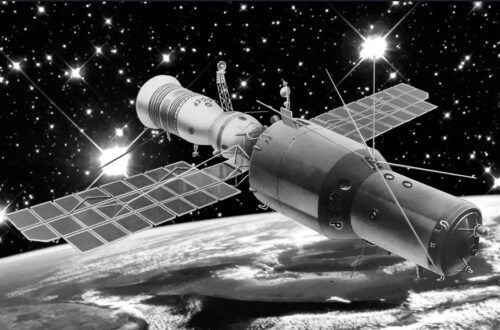
The Gun – Rikther 23
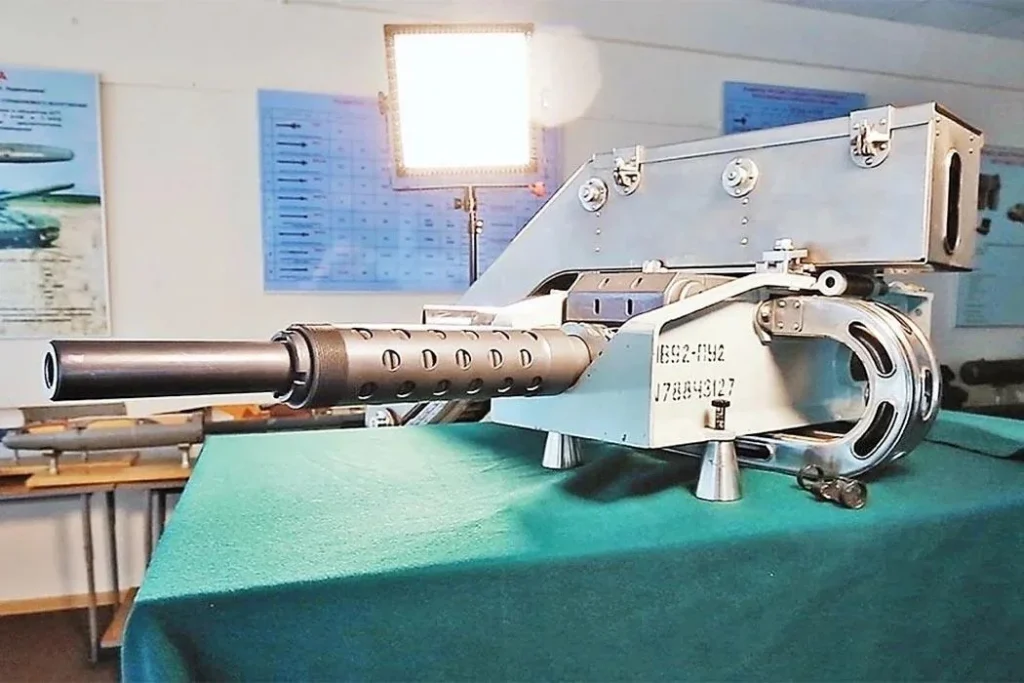
The Rikther R-23 was an aircraft based auto-cannon, developed for the Soviet Air Force originally starting in the late 1950s. It was made to be as short as possible to avoid problems found on high-speed aircraft when the guns were pointed into the airstream. It was a gas operated revolver cannon, that would fire up to 2,500 rounds per minute. This made it the fastest firing single-barrel cannon ever introduced into service.
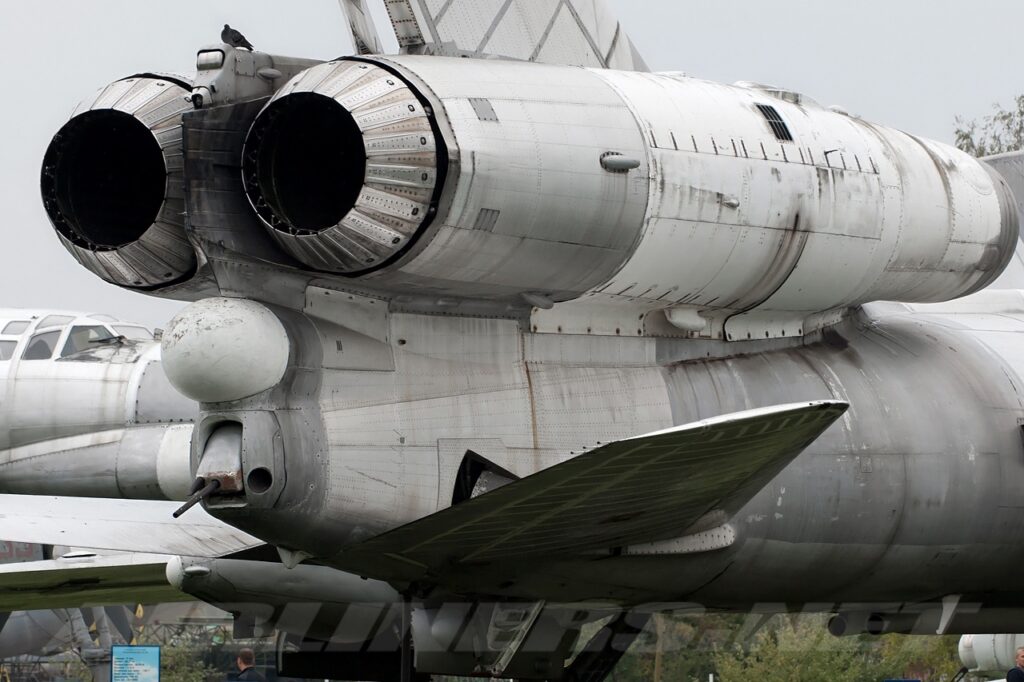
It took some time to develop, and would not be used operationally until 1964. It was only ever used in the airforce in the tail turret of the Tu-22, (the first supersonic bomber used by the Soviet Union), and a modified version was then used on the Salyut-3.
It was later superseded by the Gryazev-Shipunov GSh-23, a weapon that is still in service to this day. It was the only cannon to have ever been fired in space, with nothing else ever being tested since.
It used a unique type of ammunition, a telescoped round. Because the round was fed into the gun rearward, instead of the traditional way of feeding forward, it meant the shape of the shell casing was inverted. The bullet, was held into the case by heavy crimping near the end of the shell, which expanded once fired. The cartridge was 23mm* 260mm, with a projectile weight of 175 grams, and a propellant charge of 67 grams of smokeless powder.
The R-23M, seen above, was specifically modified for it’s space-use, and lost about 9kgs from the original weight.
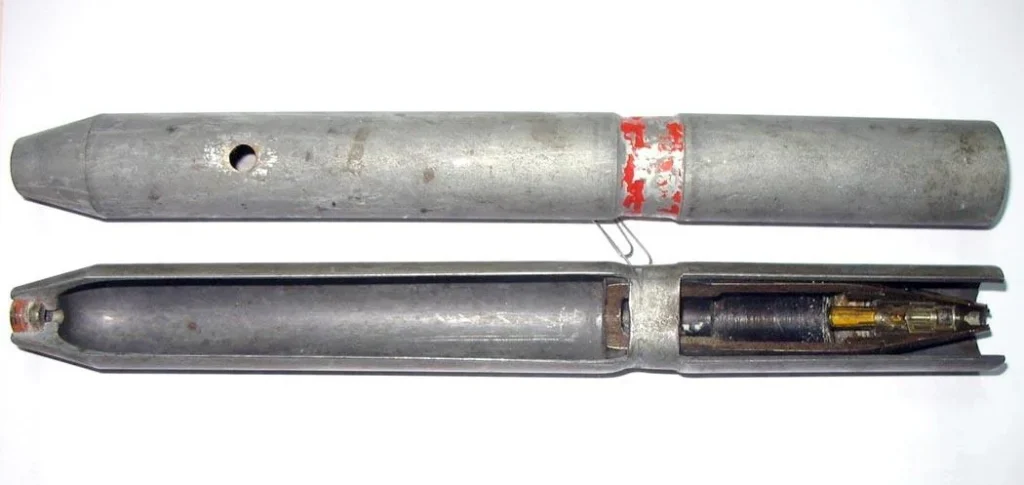
Three firing cycles of the R-23M would be conducted during the de-orbiting cycle of the station. It fired roughly 20 rounds, with the cannon postioned at the angle of travel of the craft. The main thruster and attitude thrusters would’ve needed to have been fired to keep it steady. From what is known, it worked perfectly, but the vibration and recoil effects would’ve been great, even despite the counter-balance. As it was conducted during de-orbit, all of the rounds and shell casings would’ve melted when they hit the atmosphere shortly after.
Because of the intense vibrations, Missiles would later be suggested for use, but it is unknown if this ever took place.
<- Pictured Left: Rear of a TU-22 Blinder, with a mounted, radio controlled, R-23.
Leave a Reply