

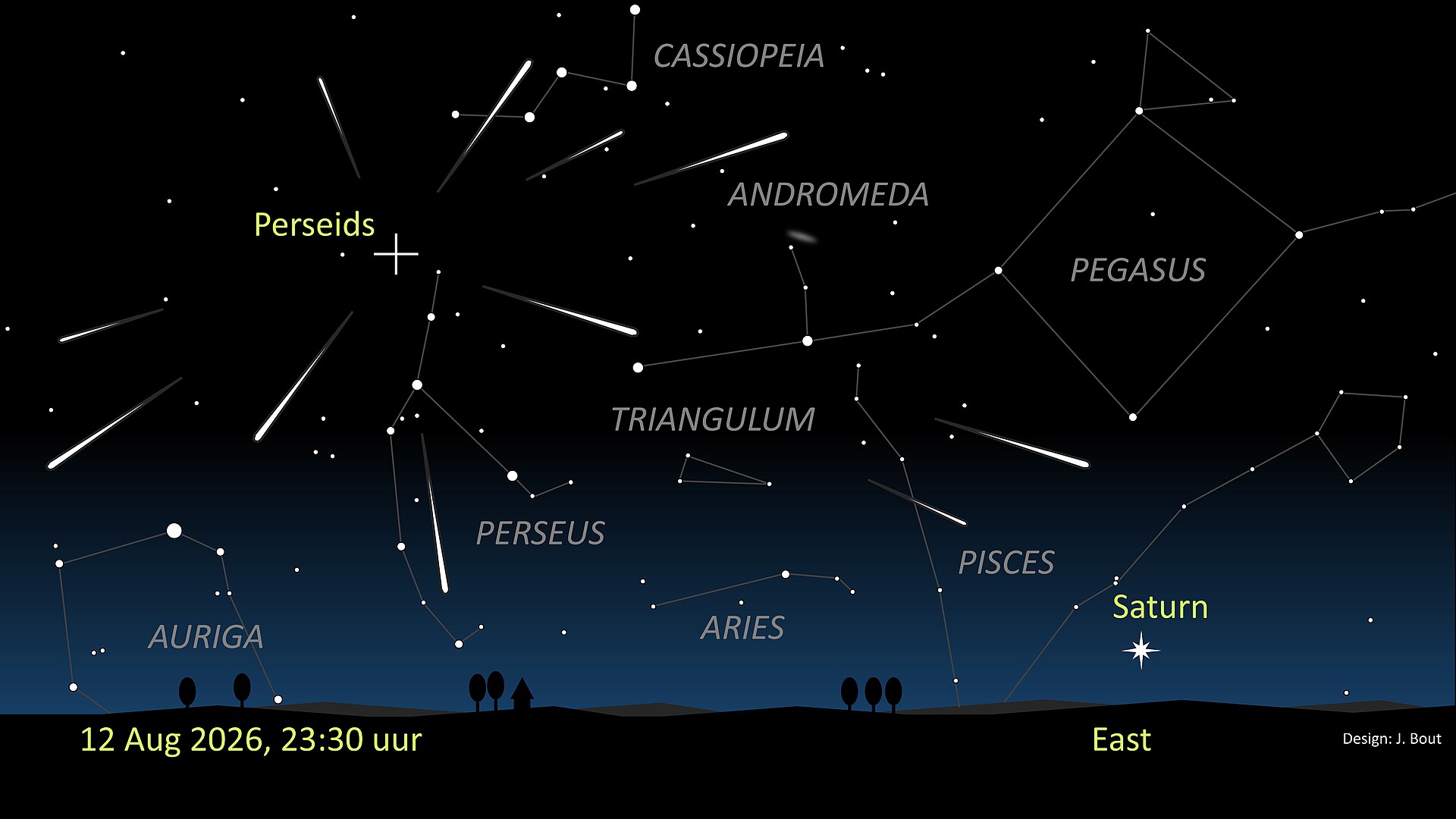
Perseids Meteor Shower
The Perseids are a well-known and prolific meteor shower, that can be seen easily from the Northern, (and less easily from the Southern), hemisphere, usually visible at night from mid-July to Late August. They are called the Perseids, as the often seem to come from the general direction of the constellation known as Perseus, and, in more modern times, are seen to border Cassiopeia and Camelopardalis.
They originate from a stream of debris, called the Perseid cloud, which stretches along the orbit of the comet Swift-Tuttle. It is all particles that have been ejected by the comet, during it’s 133-year orbit of the Sun.
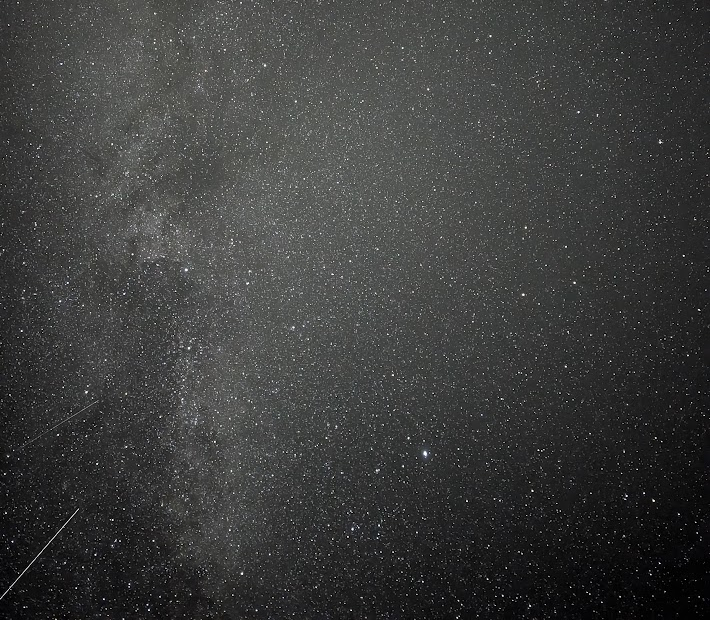
Pictured Left: In the bottom left of the image, above the solid white line of an orbiting satellite, a fainter white line of a Perseid can be seen darting across the photo, taken by me near Holy Island.
The Comet, Swift-Tuttle, that the Perseids shower comes from, is a large comet, that is about 26km in diameter. It was originally disovered by Lewis Swift, and Horace Parnell Tuttle, between the 16th July 1862, and the 19th July 1862, hence the name, Swift-Tuttle.
It has an orbital period of 133 years, with an Aphelion (furthest point) of 51.225 AU, slightly further by 2 AU than Pluto’s Aphelion, and a Perihelion of 0.9525 AU, which is between Earth and Venus’ orbit. When heading towards the Sun, it gets up to 42.6km/s (95,293.49 mph), and when heading back to Kuiper Belt, it gets down to just 0.8km/s (1789.55mph. This is still 25.5 times the speed limit.) It was last nearest to the Sun on the 12th December 1992, and won’t be back until 12th July 2126.
A fairly unusual aspect of the orbit, is that, because of Jupiter, it was recently captured into a 1:11 orbital resonance with the gas giant, meaning it completes 1 orbit for every time Jupiter commits 11 orbits. It only entered this resonance 1000 years ago, and will likely exit such a resonance in the next few thousands years.
Pictured Right: A short video showing the orbit of Swift Tuttle from 1850, to 2150. Sun = Yellow, Earth = Blue, Jupiter = Green, Saturn = Red, Neptune = Orange, Swift-Tuttle = Pink.
The Perseids shower usually peaks in activity around the 9th & 14th of August, depending on the particular location of the stream of particles. During the peak, the rate of meteors hits 60 or more per hour. They are mostly visible in the pre-dawn hours. Many of them do also reach earth between dawn and noon, but are very hard to see due to the Sun’s light. Most of the Perseids will burn up in the atmosphere while at heights above 80 kilometres, and the largest ones will be up to 7 kilograms.
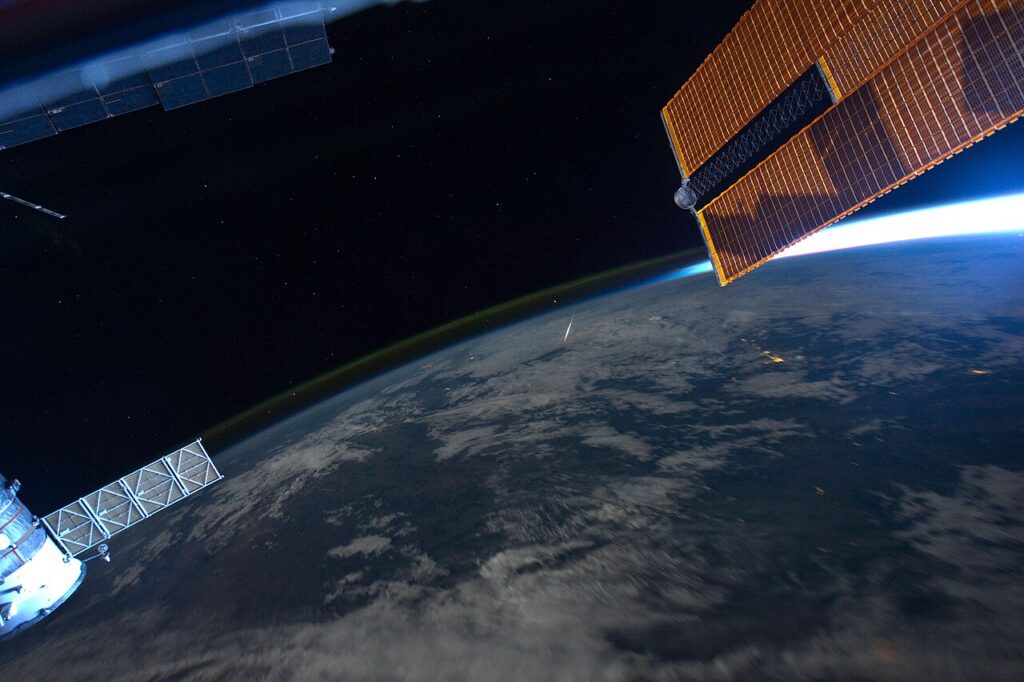
Pictured Left -> In 2011, a Perseid meteor was observed from the International Space Station.
The Perseids have seen quite a long time of observation in history, and are mentioned in texts dating back to 258 CE, but were specifically noted during observations made by a Belgian Astronomer, Adolphe Quetelet in 1836, and since then it has been recorded almost yearly. In 1992, during Swift-Tuttles return to Earth’s vicinty, it left 3 years of extra strong meteor showers, with hundreds of them being observed in a single hour. As there are some thicker debris fields that are left behind by the comet, in 2028, we could expect to see a meteor storm on August 11th and 12th of 2028, where the peak rate is at least 1000/hr.
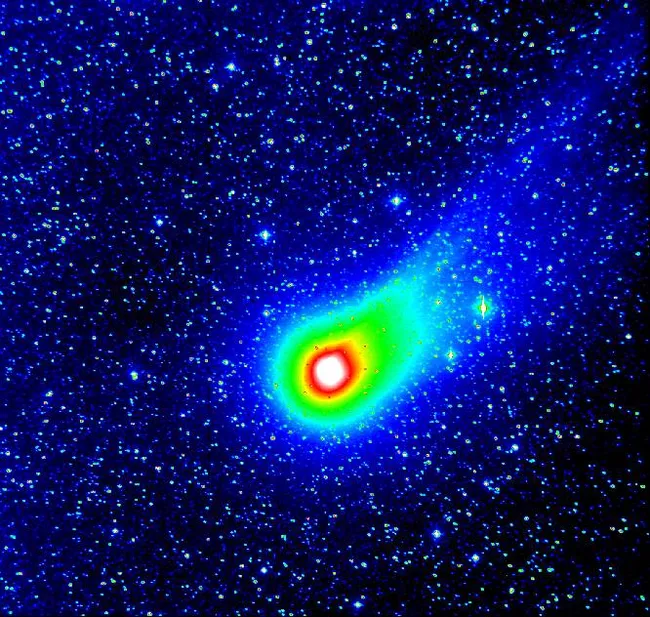
Pictured Right ->A false colour observation captured by astronomer Jim Scotti of the University of Arizona’s Lunar and Planetary Laboratory, and was taken at it’s closest point to the Earth.
Leave a Reply