

Pandora – Our Eyes To Exoplanet Atmospheres.
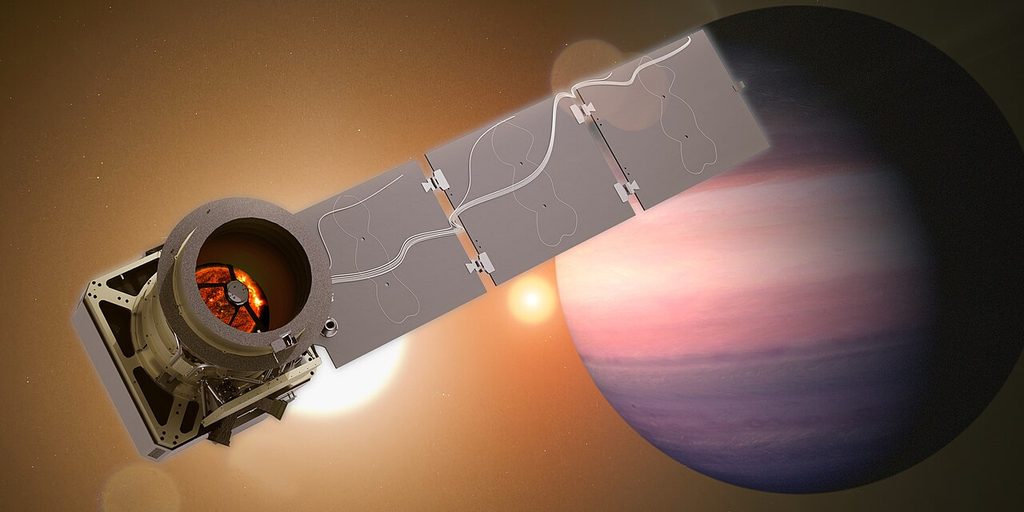
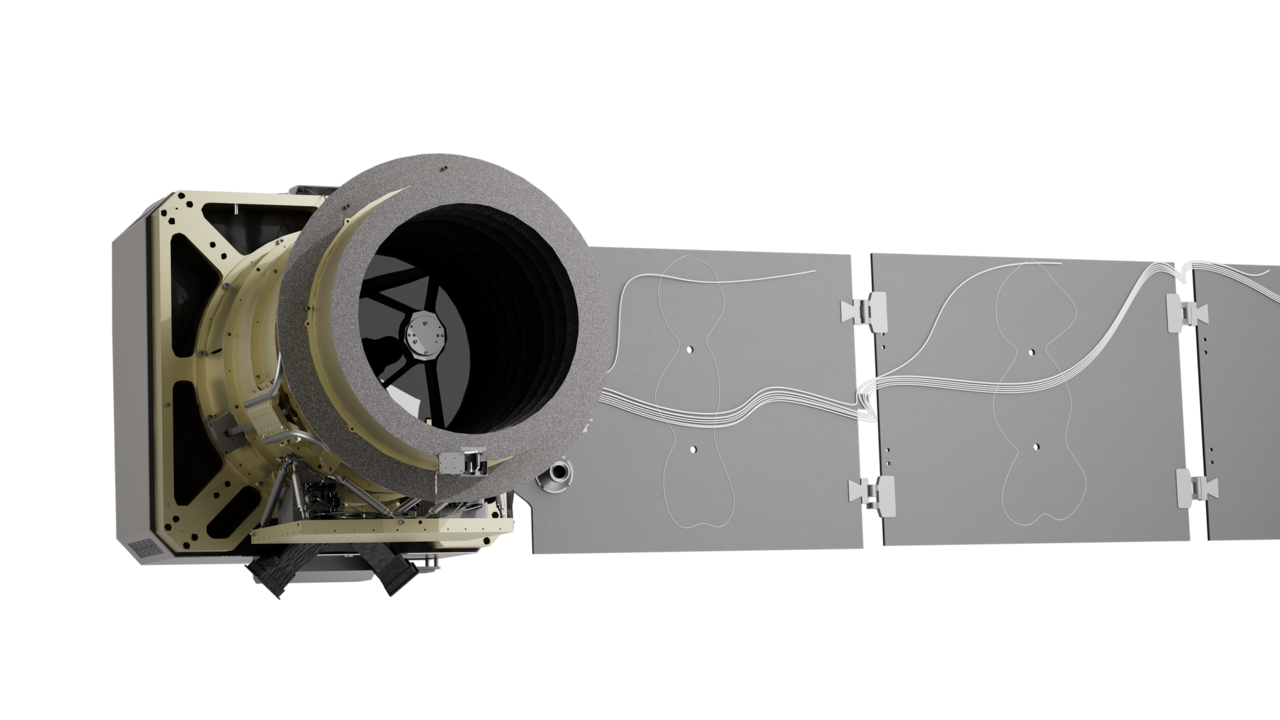
Pandora is a small NASA space telescope, that launched on the 11th of January this year, on a SpaceX rideshare mission. It launched into low-earth orbit, with an operational expected timespan of one year. It’s main purpose is to study the atmospheres of exoplanets that transit (cross in front of), their host stars, allowing it to observe the makeup of the atmosphere. It uses spare components, such as a near-infrared detector, Teledyne HAWAII-2RG Sensor, which were built to be a backup for the James Webb Space Telescope’s NIRCAM.
Pictured Left – An Artist’s Concept of the Pandora Mission.
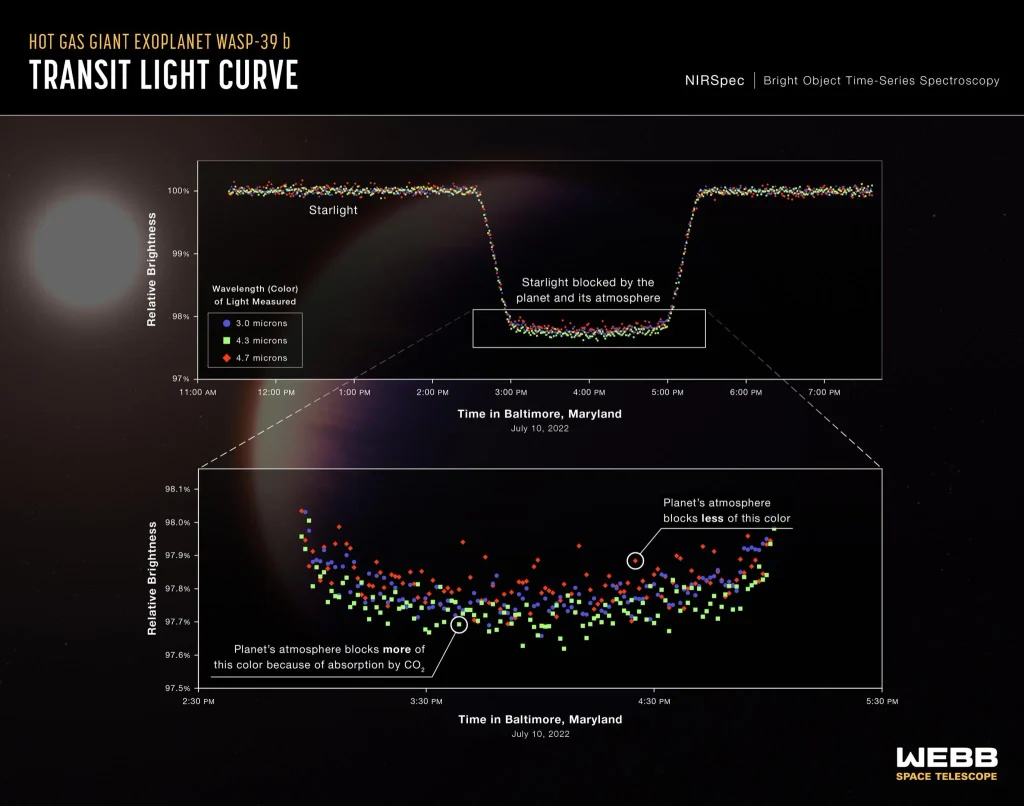
When a exoplanet transits (or planets in our own Solar system), a small fraction of that star’s light will pass through the planet’s atmosphere, before it reaches a telescope. If we measure what light is blocked by the atmosphere, we can, by defining what each wavelength is measured, figure out the composition of that atmosphere. However, it is affected by starspots, and other features of the star, that can mimic or hide certain features.
This is why Pandora was built – it’s designed to measure specific targets in 10 exposures, with each exposure lasting 24 hours – this will lead to a lot more data being gathered, and as such, can isolate and remove outliers caused by the stellar contamination. It aims to identify planets with water or hydrogen dominated atmospheres, and to try to determine which planets likely are covered by clouds or hazes.
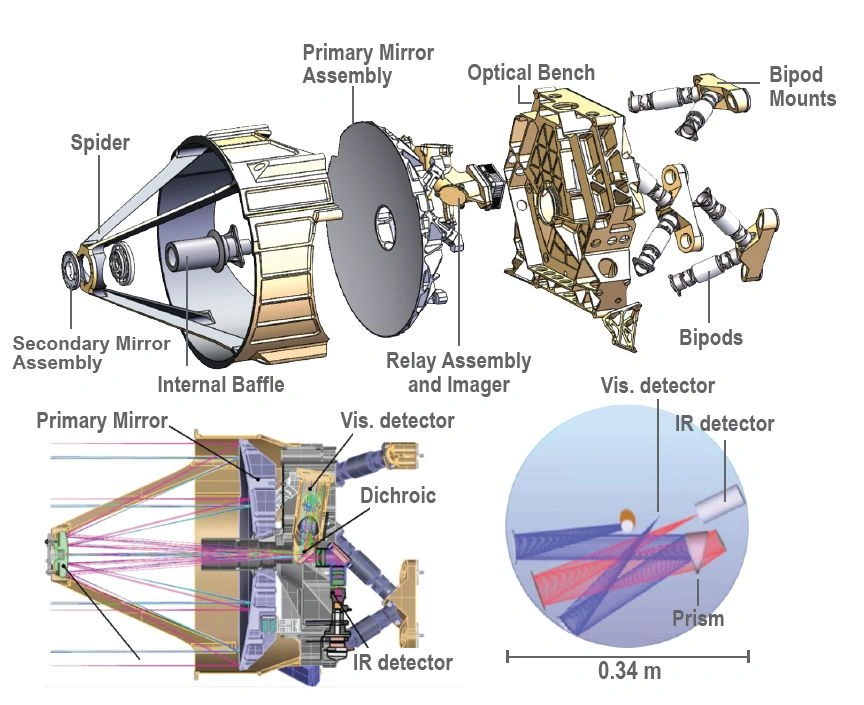
Pandora’s main payload is an all-aluminum Cassegrain telescope, (the breakdown of which is shown left), with a 45cm aperature, and an internal baffle to reduce stray light from hitting the mirror. A beam splitting mirror sends visible light to a photometer, and infrared light is sent to a spectrograph, allowing multiple measurements to take place at the same time. The visible wavelength channel measures brightness changes from about 0.38-0.75μm, while the near-infrared channel collects spectra from about 0.87-1.63μm.
The payload was developed by Lawrence Livermore National Laboratory, whilst the spacecraft bus is supplied by Blue Canyon Technologies. NASA’s Goddard Space Flight Center provided the infrared detector and detector electronics, whilst the University of Arizona is responsible for the missions operations. NASA’s Ames Research Center leads the data processing, archiving, and distribution.
Seen left – Current Position of Pandora
Pandora operates in low-earth orbit, at roughly 600km of altitude, allowing it to access the entire sky over the course of the year.
After an initial checkout and commissioning period of about one month, the mission’s prime science phase is planned to last one year, with the possibility of an extended mission.
It’s aim is to observe at least 20 transiting exoplanets.
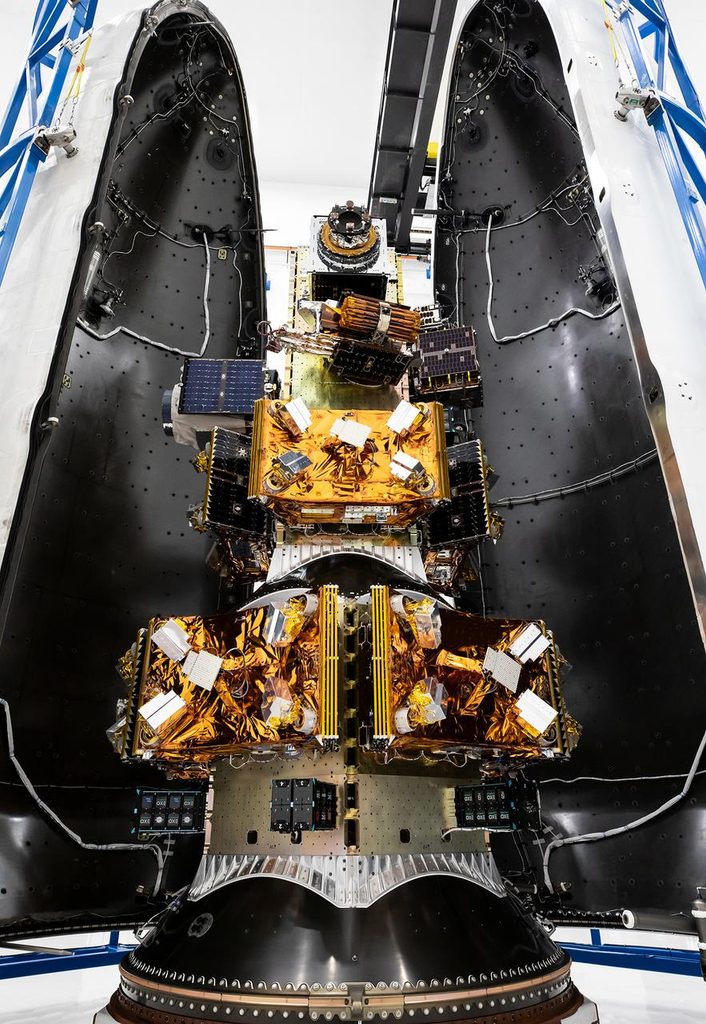
Pandora was launched on a rideshare mission, where it launches inside of a fairing that contains a number of other payloads, 39 in this case. It launched from Vandenberg Space Force Base at 5.44am local time, (13.44 GMT), and would be fully deployed 2 hours, 28 minutes, and 57 seconds later. Two other CubeSat space telescopes would be launched together along with Pandora.
BlackCAT, Black Hole Coded Aperture Telescope, which is a small X-Ray telescope, designed to observe gamma ray bursts, and other high energy trnasient astronomical events.
Also, SPARCS, Star-Planet Activity Research CubeSat, which is a small CubeSat telescope designed to monitor the flares and sunspot activity of low-mass stars of M and K Spectral Types.
A 3D Model of the telescope.
Leave a Reply