

Habitable Worlds
Habitability
What actually makes a exoplanet habitable? We use our own planet as an example, but sometimes the actual reasoning behind that isn’t super clear. I will go over this first:
Orbital Stability
What separates a stable planetary orbit from an unstable one
Unstable Configuration
Two elliptical orbits that intersect allow repeated close approaches between planets. Each close pass transfers gravitational perturbation, which builds up eccentricity or ejects one body over time. Note the star sits at a focus of each ellipse, consistent with Kepler’s first law — not at the geometric center.
Stable Configuration
Concentric, non-intersecting orbits with sufficient separation minimize gravitational perturbation between planets. Stability also depends on mass ratio and whether the orbital periods fall into a destabilizing resonance — wide separation reduces but does not by itself guarantee long-term stability.
Orbital stability is key to a world being habitable. If the orbit is not stable, then it will frequently cause the world to be put at different temperature extremes. Orbital stability is governed by several interacting factors, not distance alone: (1) whether orbits cross, allowing close encounters; (2) the mass ratio between bodies, more massive perturbs exert stronger effects; (3) orbital resonance – certain period ratios between planets amplify perturbations over many orbits even without crossing; and (4) eccentricity – higher eccentricity increases the range of distances a planet sweeps through, raising the chance of destabilizing encounters.
Habitable Zone
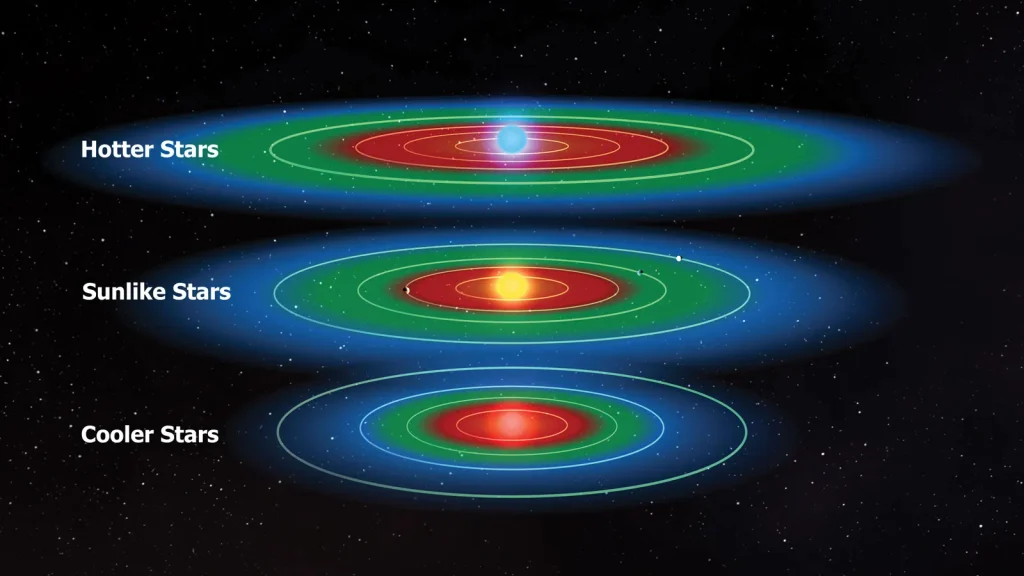
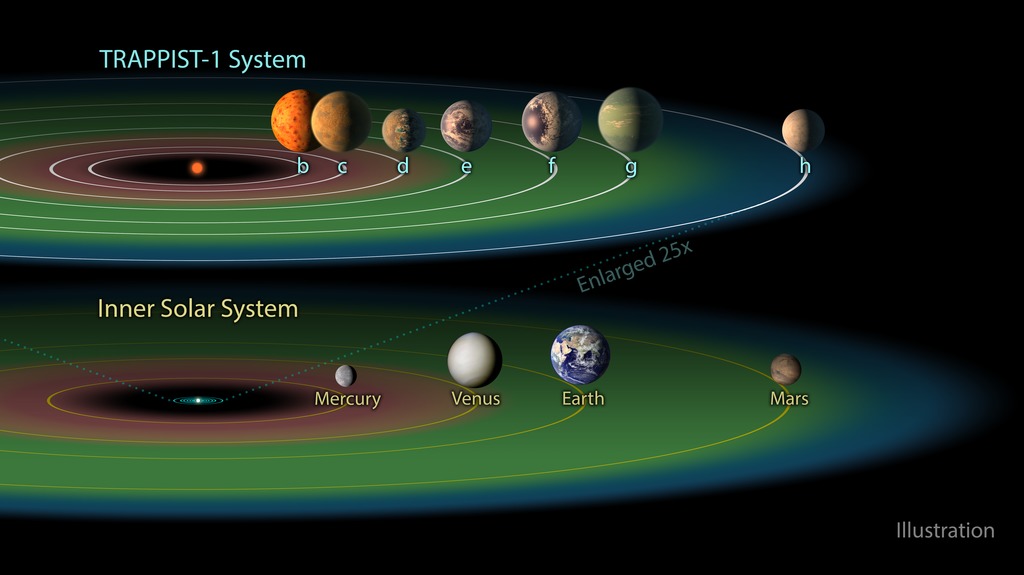
Habitable zones refer to the region around a star where the potential temperature of a planet orbiting at a specific distance from a star could allow liquid water to exist on the surface, if the atmosphere where to be strong enough. The bounderies aren’t specifically fixed, but it depends on the system’s star’s characteristics, such as it’s luminosity and temperature. Hotter stars will have their goldilocks zone being further away from the star, whereas colder ones, like red dwarfs, it will be closer in. Though, there are other factors involved, as red dwarf stars put a lot of X-Rays and UV radiation out into their systems.
Planetary Mass / Size
2Planetary Mass & Size
Mass and size affect a planet’s ability to retain an atmosphere against thermal and stellar-wind stripping, and to sustain plate tectonics — which drives long-term carbon cycling and climate regulation. Mars-sized bodies and smaller tend to lose atmosphere more readily than Earth-mass planets.
Host Star Activity / Type
Different types of stars have very different characteristics, and each will affect habitability.
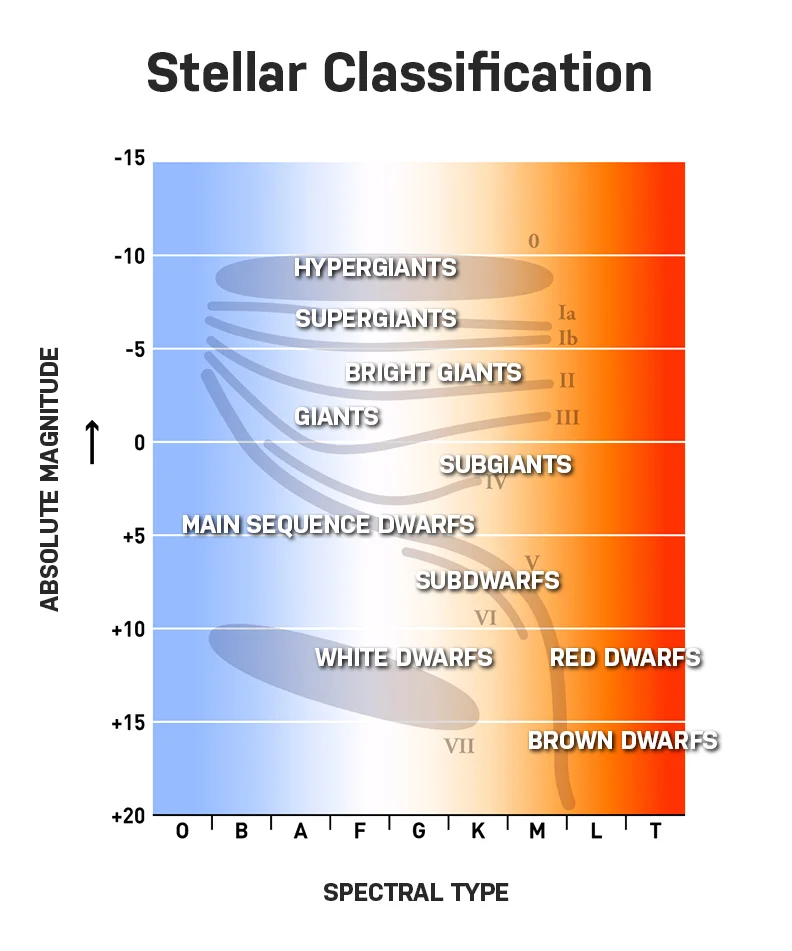
Red Dwarfs, M Type stars, are small, cool, and last for trillions of years, but they are prone to frequent stellar flares, with intense X-Rays an UV-Rays, which strip nearby atmospheres. Planets that orbit Red Dwarfs also frequently are tidally locked, making one side much hotter than the other.
On the other end of size, Blue Giants are massive, and hot, but have a very short lifespan, which is far shorter than our expectation for how long life takes to fully evolve, whilst also giving off intense radiation. When Blue Giants die, they very often go supernova, which is not good for local planets.
Atmosphere Composition
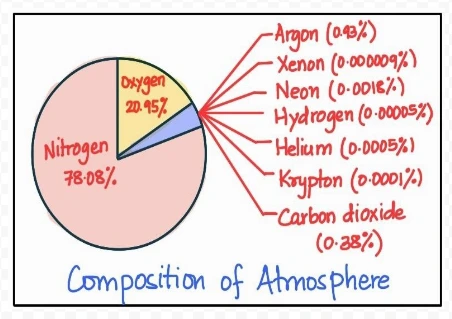
An exoplanet’s atmosphere should have greenhouse gases, to allow for trapping of the heat on the surface, and also allowing for CO2 and H2O vapor being present in the atmosphere.
CO2 helps us regulate temperatures using the Green house effect. O2 is then a byproduct of CO2 being produced by biological processes. On Earth, this is by plant’s photosynthesizing.
Ozone, or O3, is a byproduct of that oxygen then interacting with a star’s light, which acts as a shield against harmful UV radiation, which is important for life.
Presence of a Large Moon or Magnetic field
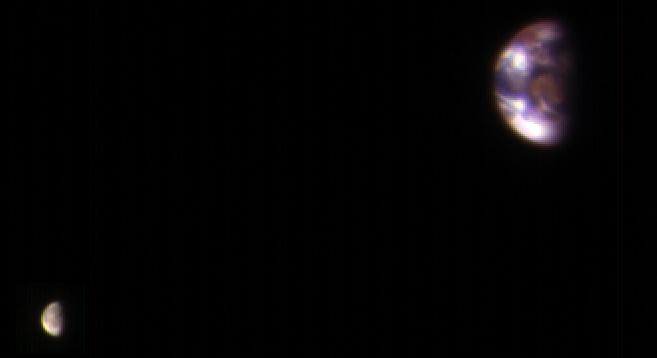
A large moon is theorized to be important in stabilizing a planet’s axial tilt, which helps to reduce climate swings – leading to a more stable climate. Without a moon, (such as our own), a planet’s tilt could wobble chaotically, which will never allow for life to adapt to the climate swings.
Current Habitable Exoplanet Candidates
Gliese 180 c
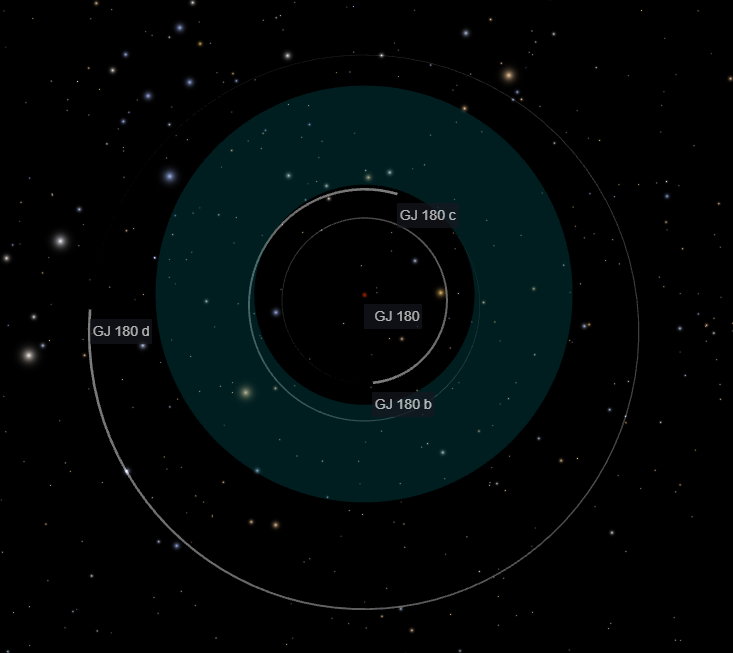
Gliese 180, often shortened to GJ 180, is a small, red dwarf star in the Equatorial Constellation of Eridanus, at a distance of about 39 light years away, and is coming closer to us at a speed of -14.6km/s. Based on study of the star, is not considered to be an active star, at an age of about 5 billion years old.
There are 3 planets that have been identified in the system, labelled b, c, and d.
The main planet that is marked as habitable is Gliese 180c. It’s 24 day orbital period puts it at the closer end of the expected habitable zone of it’s parent star, and it has a fairly stable orbit. It’s mass is about 6.4 M🜨, (earth masses).

Orbital Stability:
Gliese 180c is in a very stable orbit with it’s host star and planets.

Habitable Zone:
Gliese 180c is in the habitable zone of it’s parent star.


Host Star Type / Activity:
While Gliese 180 is a red dwarf star, which is known for stellar flares, from our understanding it’s an inactive star.

Atmosphere Composition:
Currently, the composition of Gliese 180c’s atmosphere is unknown.

Large Moon / Magnetic Field:
Currently, there are no known moons for Gliese 180c, and it’s magnetic field is unmapped.
My Opinion:
Personally, I think Gliese 180c is a fairly good candidate for an exoplanet – it clears all 3 of the first categories, but in the final 3 it trips up a lot. With unknowns, these can only be confirmed by extended observation of the planet, and until done so, would prevent it from being an automatic no. Gliese 180c is also not fully confirmed either, so there is a chance this exoplanet is wiped completely off the table.
HD 40307 g
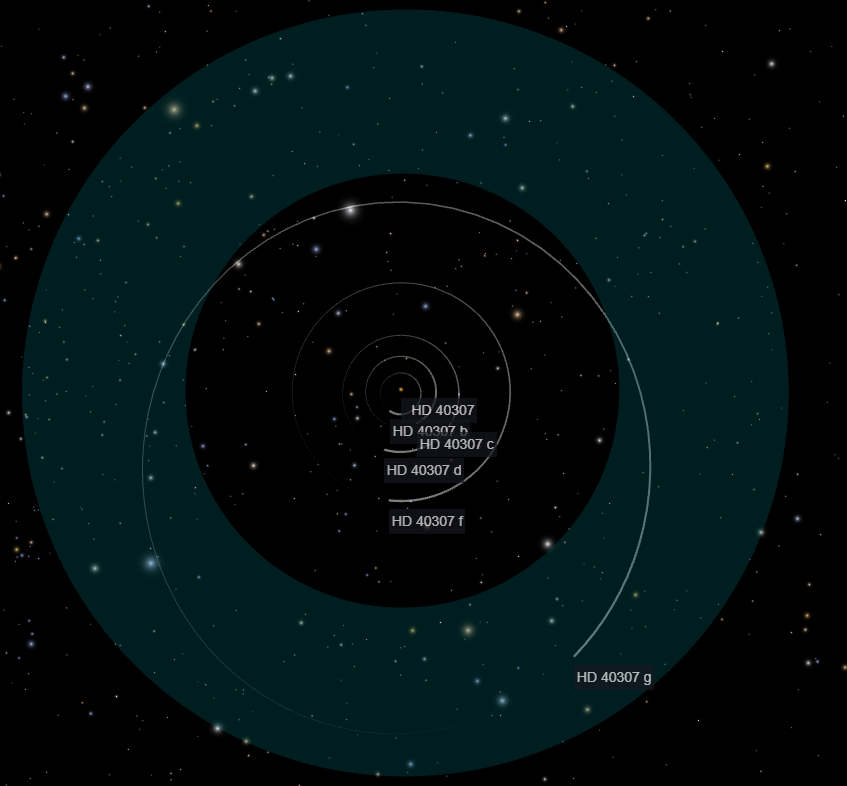
HD40307 g is an exoplanet candidate suspected to be orbiting in the habitable zone of HD 40307. HD 40307 is a orange main-sequence star, much like our own, which is 42 light years away, in the constellation of Pictor. It has a mass of 0.75 M☉, but much younger at just 1.2 Gyr (billion years). It came within 6.4 light-years of the Sun about 413,000 years ago.
HD 40307 g has an orbital period of 197.8 days, and is in a fairly stable orbit, in the star’s habitable zone for much of it’s year. It likely has a mass of 7.09 M🜨, which does put it close to the 10 M🜨 limit, and it’s temperature is likely to be roughly 277.6 kelvin, or 4-9oc
Orbital Stability:
HD40307g is in a very stable orbit with it’s host star and planets.
Habitable Zone:
HD40307g is in the habitable zone of it’s parent star.

Host Star Type / Activity:
HD40307 is a main sequence star, like our own, making it a good host star.
Atmosphere Composition:
Currently, the composition of HD40307g’s atmosphere is unknown.
Large Moon / Magnetic Field:
Currently, there are no known moons for HD40307g, and it’s magnetic field is unmapped.
My Opinion
Personally, I think HD40307g is a great exoplanet candidate for habitability – the star this time is much more predictable, and if our own sun is to go by, HD40307 will likely be around for some 9 Gyr, giving HD40307g plenty of time for life to adapt – but we do need more information about it’s moons and atmosphere.
Tau Ceti f
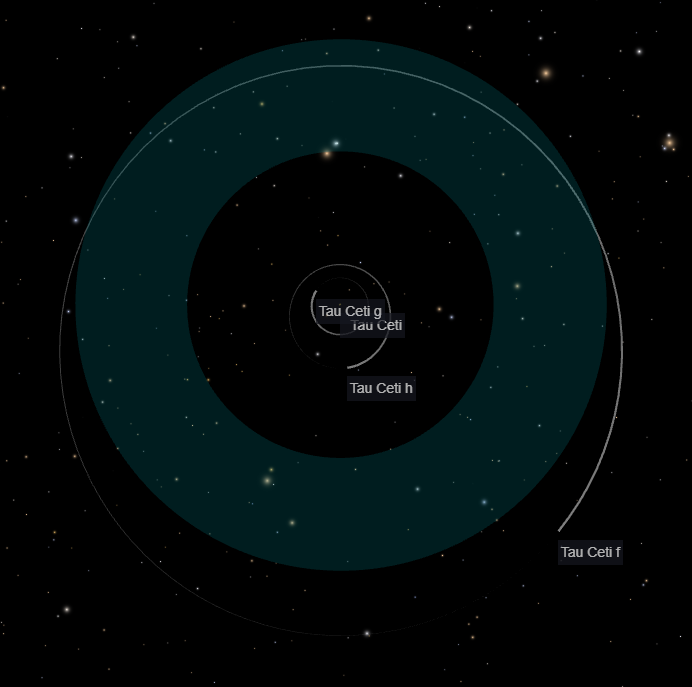
Tau Ceti f, a candidate exoplanet around the recently well known Tau Ceti star, is a planet with the mass of roughly 3.93M🜨, making it much closer to our own planet’s mass.
Tau Ceti itself is a single star in the constellation Cetus, and is very similar to our sun, at roughly 0.78 M☉. It is 12 light years away from the Solar system, and is the nearest solitary G-Type star, also being known to appear relatively stable. It is older than our sun though, at 8-10 Gyr, and can be seen with the naked eye.
Tau Ceti F has an orbit at a distance of roughly 1.35 AU, which would be similar to Mars in our solar system, taking 642 🜨 days to orbit Tau Ceti. However, a further in-depth study suggests it’s orbit could actually be longer, nearing 1000 Earth🜨 days.

Orbital Stability:
Whilst Tau Ceti f is in a fairly stable orbit, it’s suspected it’s only been in this orbit for less than 1 Gyr, suggesting it may be slowly variable
Habitable Zone:
Tau Ceti f is in the habitable zone of it’s parent star.
Host Star Type / Activity:
Tau Ceti is a main sequence star, like our own, making it a good host star.
Atmosphere Composition:
Currently, the composition of Tau Ceti f’s atmosphere is unknown.
Large Moon / Magnetic Field:
Currently, there are no known moons for Tau Ceti f, and it’s magnetic field is unmapped.
My Opinion
In my opinion – I don’t think we have enough data to either cross it off or accept Tau Ceti f as a good exoplanet candidate. There is a good amount known about it, but it being in a slowly variable orbit raises some concerns for me. We also aren’t super sure if it even exists.
TOI-715b
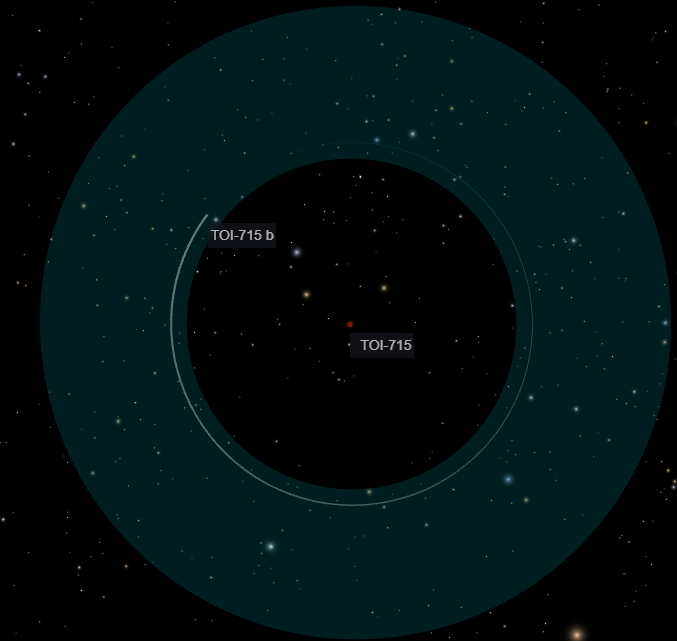
TOI-715 is a red dwarf star located 42 parsecs, or 140 light years, away from the Earth in the constellation Volans, close to our southern celestial pole. It hosts one confirmed exoplanet, TOI-715b, a super-Earth orbiting in it’s habitable zone. Another planet is suspected, but not confirmed. TOI-715 is much smaller and cooler than the Sun, at 0.225M☉ and 3075K, with an Age of 6.6 Gyr. It was initially spotted by the Transiting Exoplanet Survey Satellite.
TOI-715b was identified in May 24th, 2019, and has a radius of just 1.55 R🜨, and is orbiting in the star’s habitable zone, with an orbital period of 19 days, and is orbiting it’s host star at a distance of 0.083 AU. It likely has an average temperature of -39oC. They are hoping that the JWST will be able to confirm it’s atmosphere in the future.

Orbital Stability:
TOI-715b is in a very stable orbit.
Habitable Zone:
TOI-715b is in the habitable zone of it’s star

Mass / Size:
Whilst it’s mass isn’t confirmed, it’s radius being of a certain size would suggest it’s similar to our own, maybe 2-3 M🜨

Host Star Type / Activity:
TOI-715 is a red dwarf star, and is also not confirmed to be inactive either, but it is older, so it’s possible it’s less active.
Atmosphere Composition:
Currently, the composition of TOI-715b’s atmosphere is unknown.
Large Moon / Magnetic Field:
Currently, there are no known moons for TOI-715b, and it’s magnetic field is unmapped.
My Opinion
Whilst I feel that it’s stable orbit and being in the habitable zone is a good sign for this planet, and it’s radius is only just bigger than ours, my concern is with the red dwarf, and the fact that we just don’t yet know enough about the planet to say if it’s a good candidate or not.
Kepler 452b
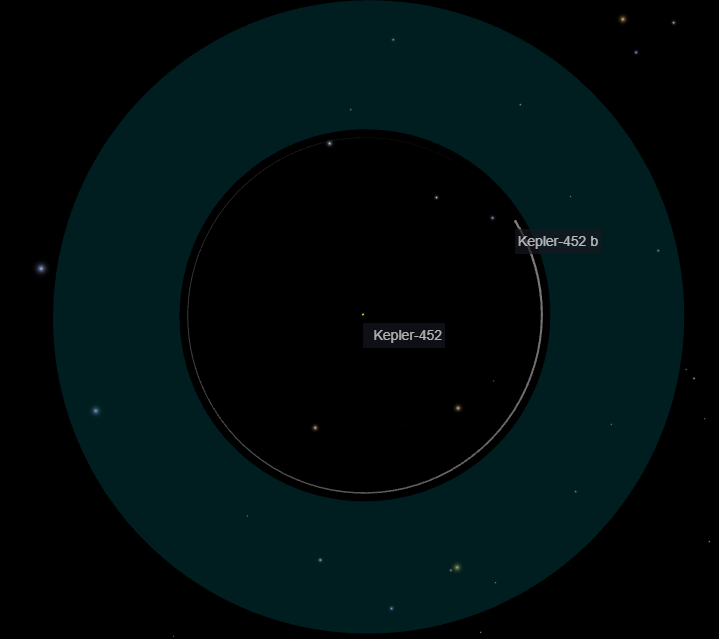
Kepler 452 is a G-type subgiant star, located roughly 1,810 light years away from Earth, in the Cygnus constellation. It has a similar temperature to our own sun, but is brighter and more massive. It has a mass of 1.037M☉, a temperature of 5757K, and an age of 6 Gyr.
Kepler 452b, sometimes quoted to be Earth 2.0, is a disputed super-Earth exoplanet. It orbits in the inner edge of the habitable zone of it’s parent star, and is the only planet so far located in the system by the Kepler space telescope. It orbits it’s star at a distance of 1.04AU, an orbital period of 385 days, a mass of roughly 5M🜨, and it’s radius is 1.63R🜨. It’s gravity is likely to be 1.9g, compared to the 1g of our own. Habitability is debated, as because of it’s proximity to the star, it’s possible it’s subjected to a runaway greenhouse effect, like Venus.
Orbital Stability:
Kepler 452b is in a very stable orbit.

Habitable Zone:
Kepler 452b, is towards the inner edge of the habitable zone.

Mass / Size:
It has a mass of 5M🜨, which would put it in the safe limit.

Host Star Type / Activity:
Kepler 452 is very similar to our own star.

Atmosphere Composition:
Whilst the full composition is not known, my concern is that it is likely either a runaway effect, or volcanos have covered the atmosphere with ash and dust.
Large Moon / Magnetic Field:
Currently, there are no known moons for Kepler 452b, and it’s magnetic field is unmapped.
My opinion
Whilst I can see why it has been called Earth 2.0, with a lot of it’s details and it’s stars details being similar to our own, I am quite concerned that it is in the inner edge of the habitable zone, making it much more likely for it be subjected to hotter temperatures, and a potential runaway effect.

Leave a Reply