

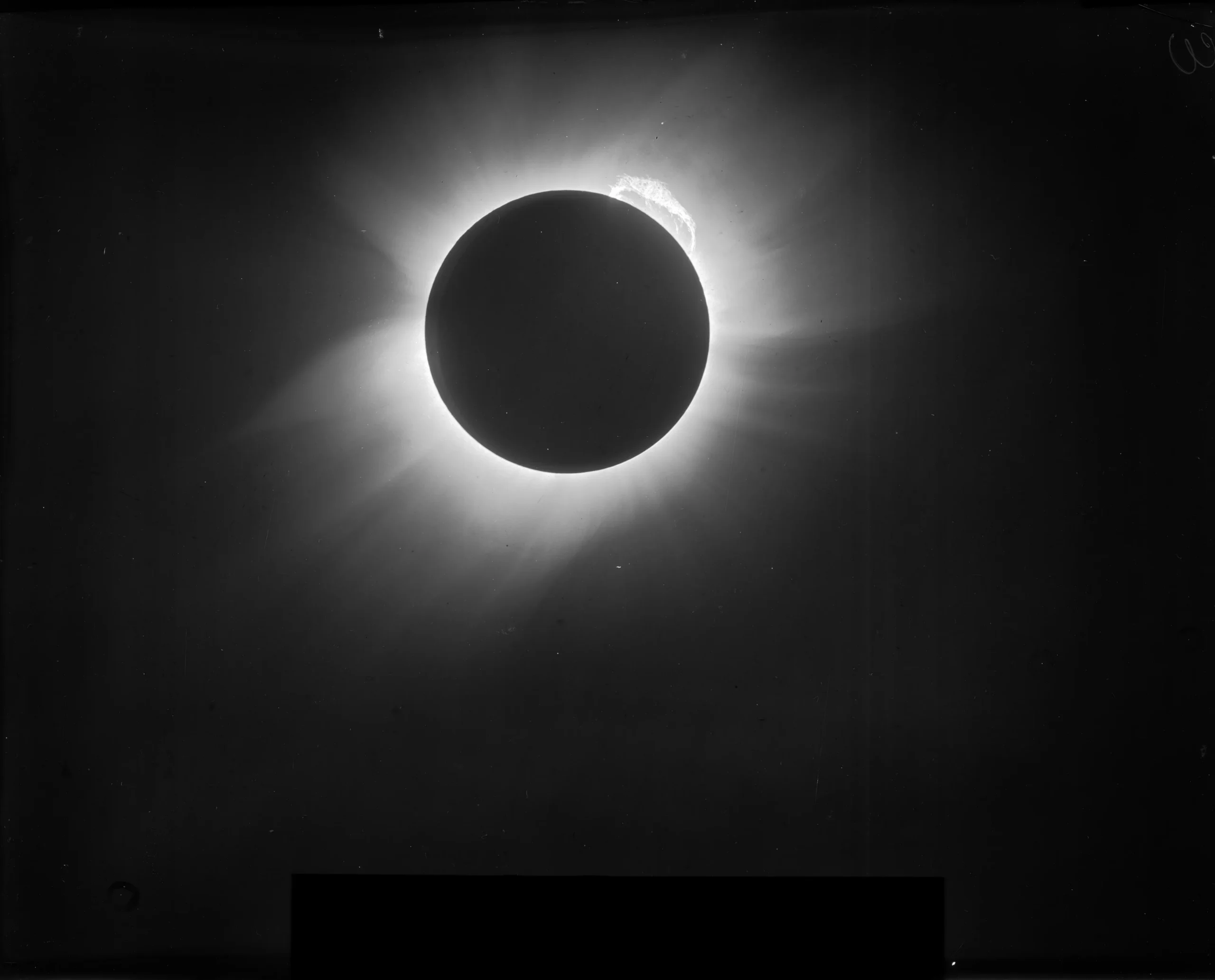
Gravitational Lensing
May 1st, 2026
Gravitational lensing is a phenomenon, where something that has a large gravitational pull, such as a galaxy cluster, a supermassive black hole, or quasars, warps space and time around them, causing visible distortion that bends light in unique ways around the object.
It was first observed in 1919, by 3 British Astronomers, Arthur Stanley Eddington, Frank Watson Dyson, and Andrew Crommelin, where they did an experiment to see if the Sun’s Gravity would bend starlight in such a way during a total solar eclipse, if they could see & photograph stars that would normally be impossible to do so. They used 3 telescopes, 2 in the Brazilian city of Sobral, and one on the West African Island of Principe, to complete the experiment. This allowed them to see the same star on both sides of the sun, due to the gravitational lensing.
In current practice, we have made numerous observations of gravitational lensing using the Hubble Space Telescope, and more recently, the James Webb Space Telescope.
Popular examples of these include photos of Hubble’s image of the galaxy cluster, J1038+4849, which has extreme gravitational lensing surrounding it, and James Webb’s, First Deep Field, which showed extensive lensing around a center galaxy cluster.
Interactive 3D Model of the Hubble Space Telescope.
Credit: @europeansouthernobservatory on Sketchfab.com
Interactive 3D Model of the James Webb Space Telescope.
Credit: Paul (Sketchfab) on Sketchfab, who uploaded it as a 3D Model Courtesy of NASA.
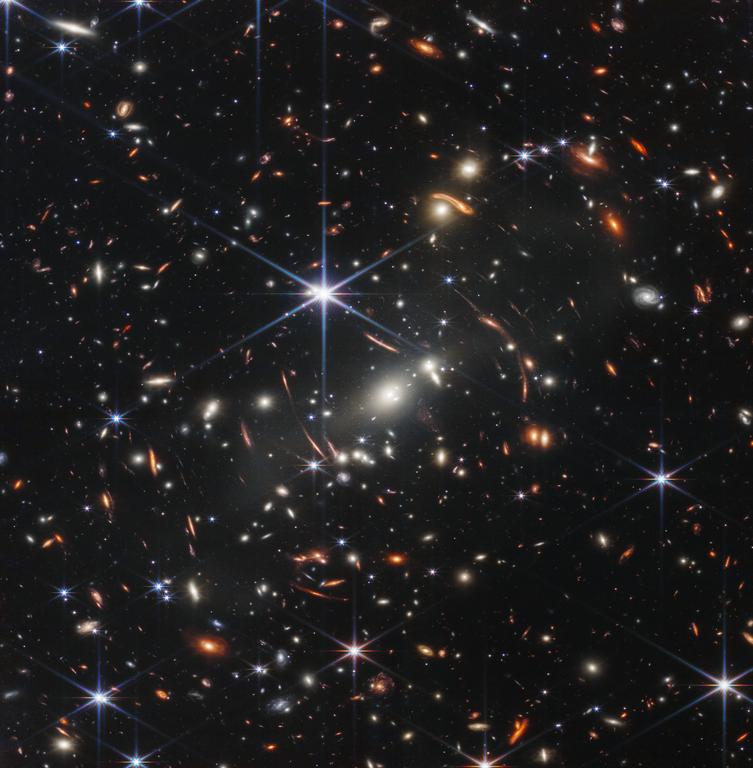
James’ Webb’s First Deep Field, showing the extensive gravitational lensing in the middle.
Credit: NASA, JWST
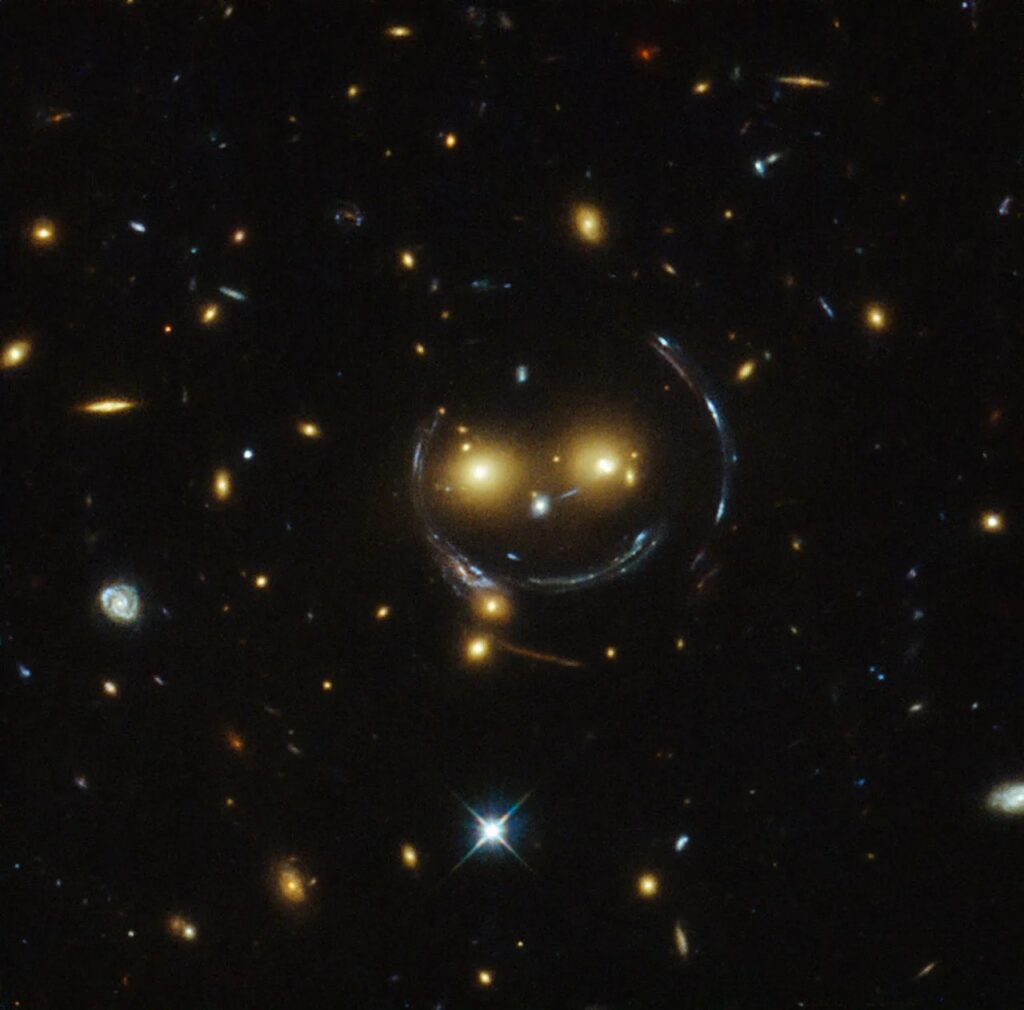
Image from the Hubble Space Telescope showing the gravitational lensing due to the galaxy cluster, SDSS J1038+4849. It appears to show a smiling face, but the two eyes are two ellipitcal galaxies, while the arcs are distant galaxies that have been lensed by Gravity.
Credit: NASA, ESA, Michael Gladders, HST
Leave a Reply