

Voyager 1’s next Milestone
15th May, 2026.
Upcoming this year, on the 15th November 2026 (roughly), Voyager 1 will reach a far enough distance, that it will take light 1 day to reach it from Earth. This means any communications with the 50 year old probe will take 2 days to get an answer.
Voyager 1 is currently 15.78 billion miles away, and 1 light day is roughly 16 billion miles away. It will hit that milestone, as mentioned, in mid-November. But what is Voyager 1?
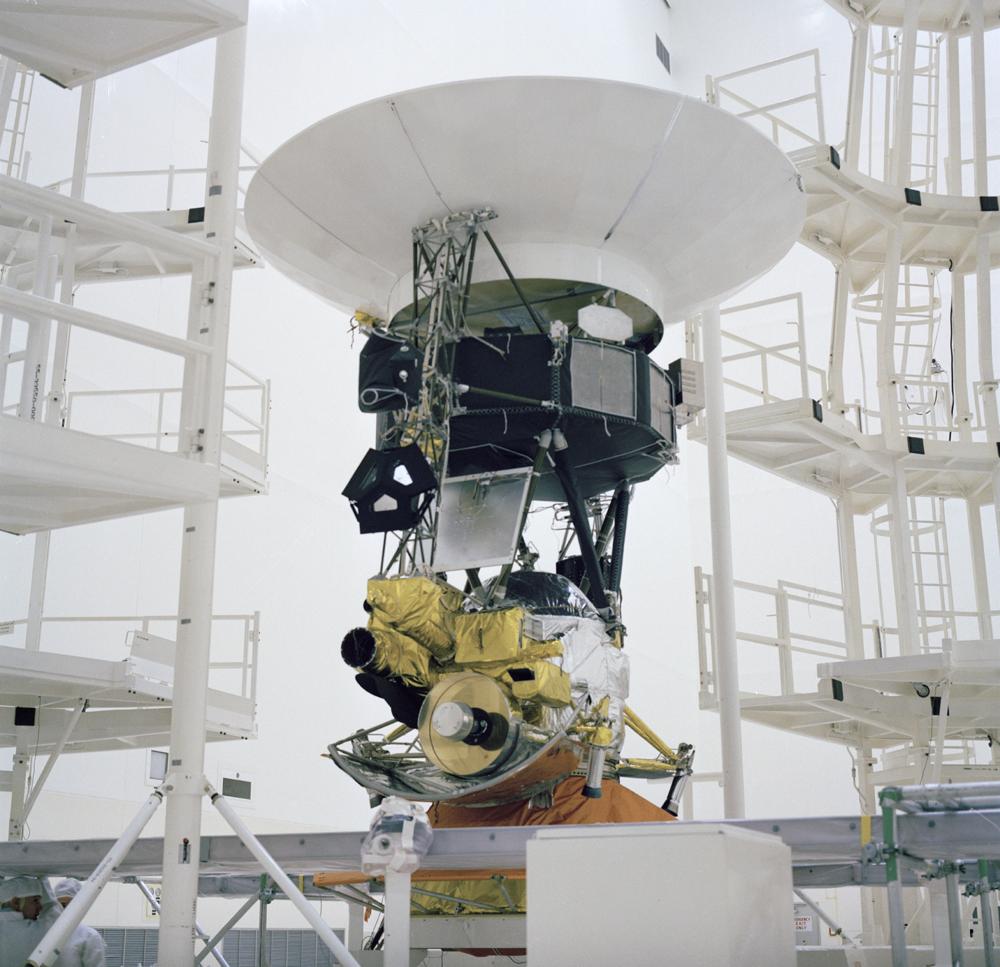
Voyager 1 is a robotic probe, originally built to visit Jupiter & Saturn back in 1977. This was during a rare planetary alignment, which only occurs every 176 years, where Jupiter, Saturn, Uranus and Neptune are aligned in such a way that a spacecraft could use each planet’s gravitational pull as a slingshot – which significantly reduces travel time and fuel to be able to reach the outer solar system.
A list of Voyager 1’s Achievements:
- The first spacecraft to reach interstellar space, back on August 25th, 2012, when it crossed the Heliopause, allowing it to send back the first direct measurements of the galactic magnetic field and cosmic rays.
- It is the furthest man-made object from Earth
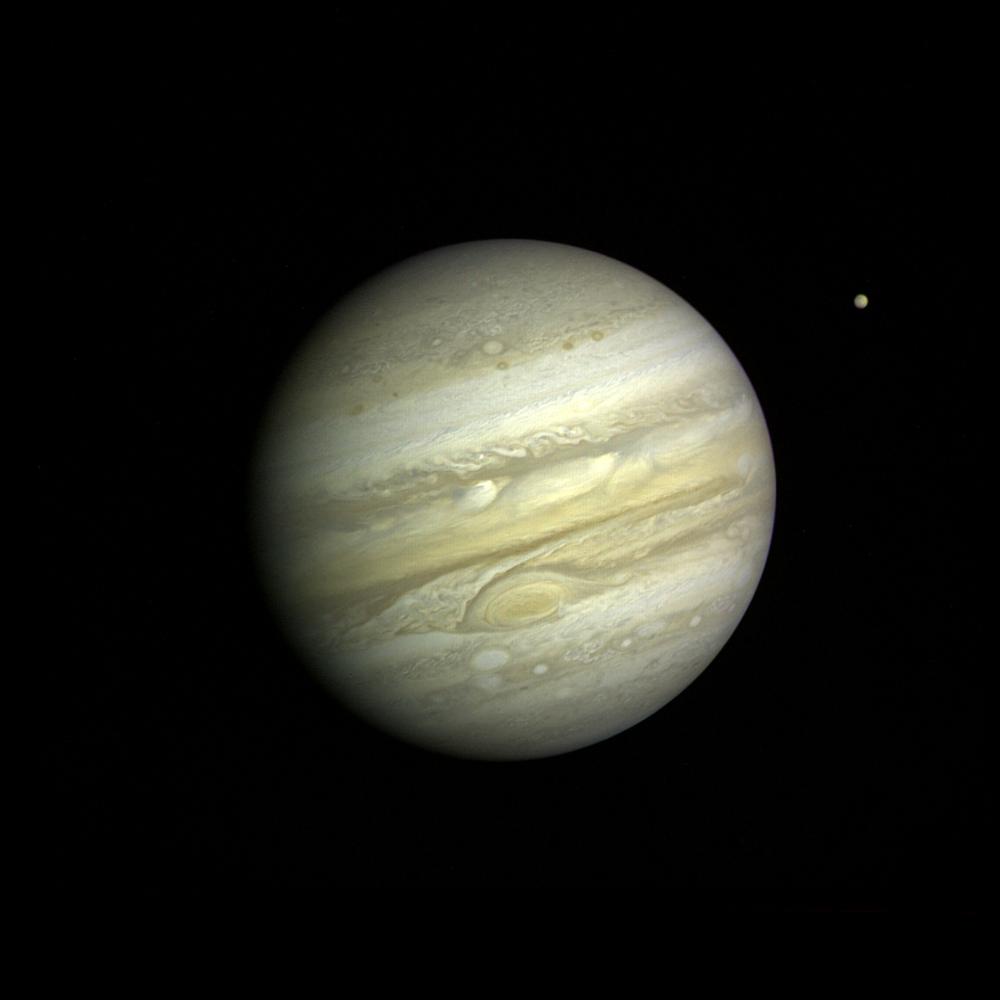
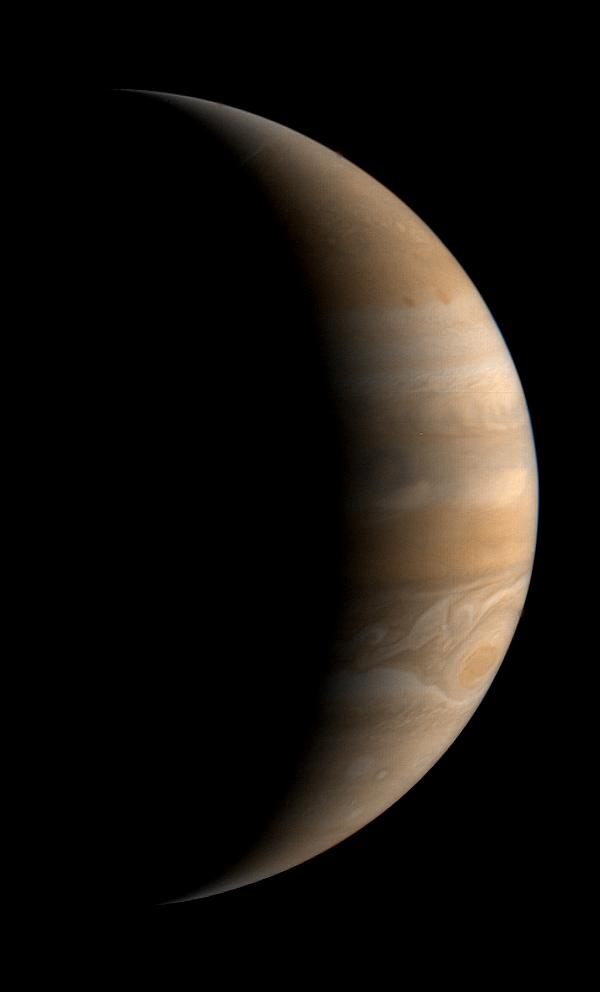
- It captured the first high-resolution images of Jupiter and its moons. Major discoveries included finding active volcanic activity on the moon Io, seeing the first lightning beyond Earth, and detecting Jupiter’s ring system.
- First highly detailed look at Saturn, and Titan, showing highly detailed views of the planet’s complex ring structures.
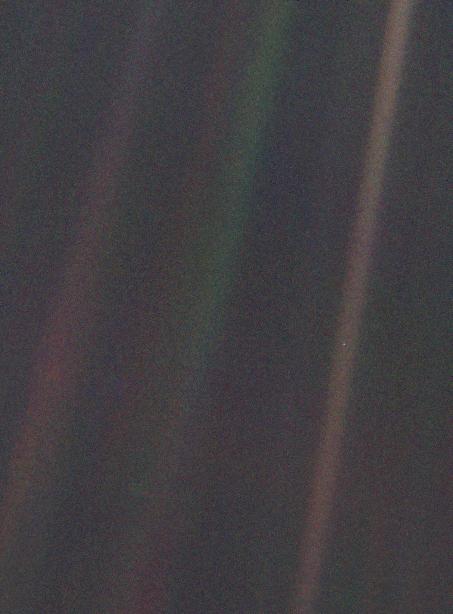
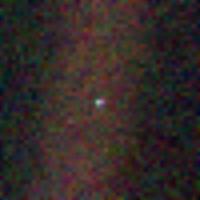
- It captured the Pale Blue Dot image, a mosaic which showed the earth as a tiny, speck of light suspended in the vastness of space.
- First spacecraft to detect a nitrogen-rich atmosphere found beyond our home planet (Titan’s atmosphere around Saturn).
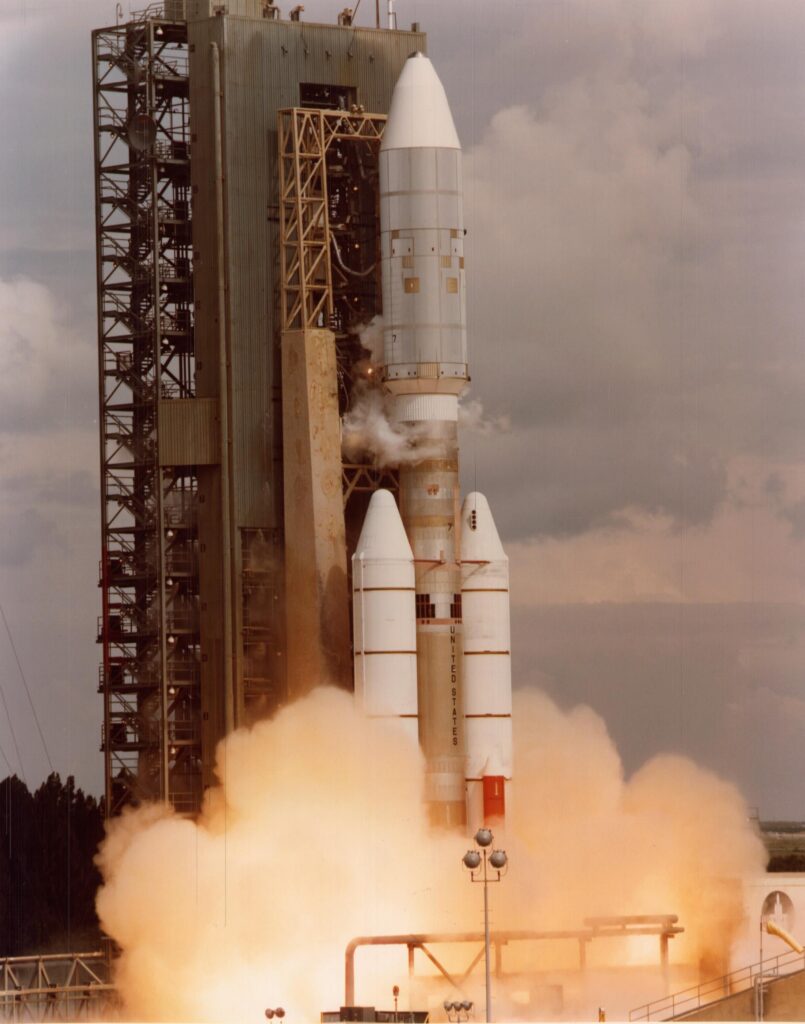
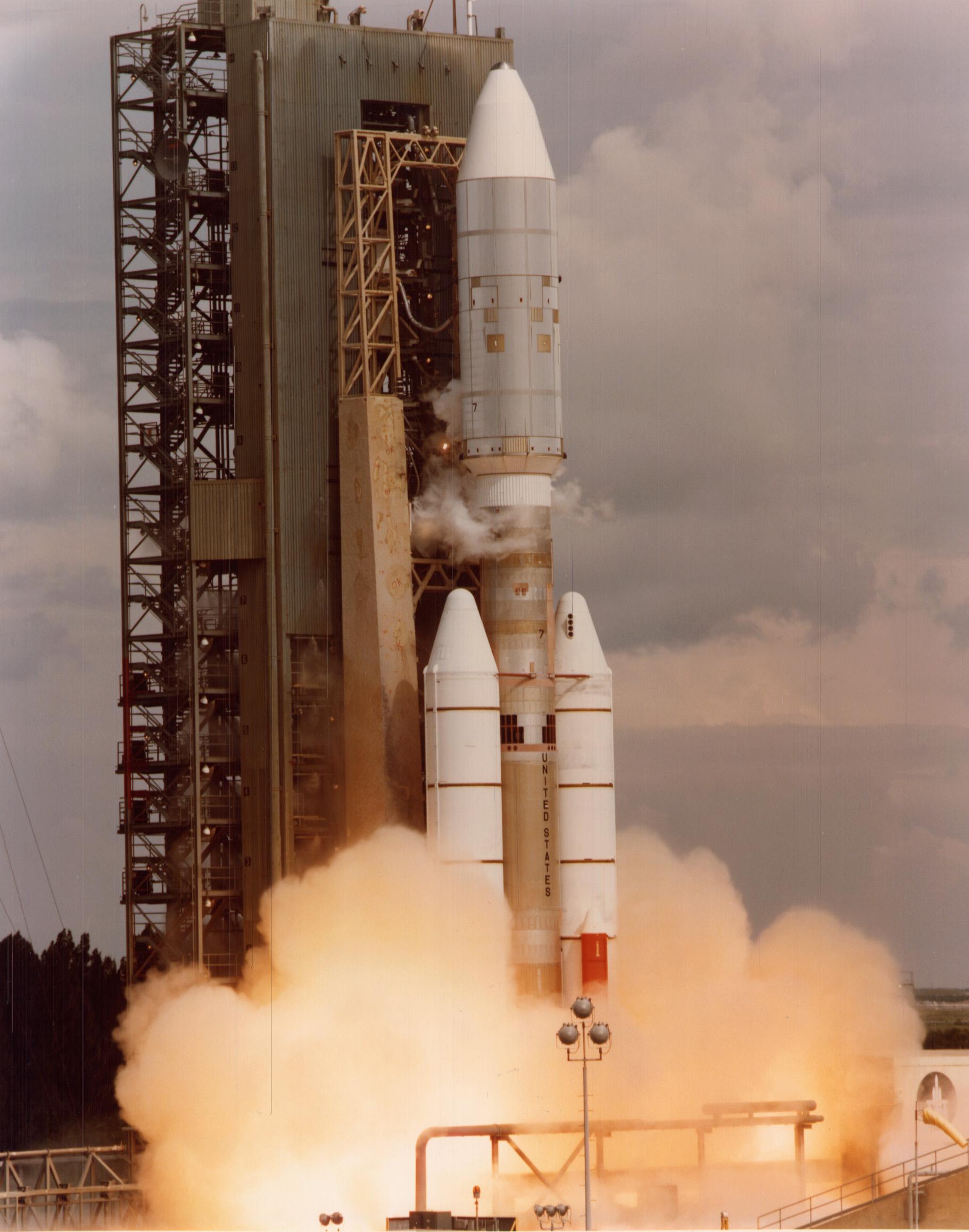
A photo of Voyager 1’s launch, on top of a Tian IIIE-Centaur rocket. This happened on September 5th, 1977. Credit: NASA
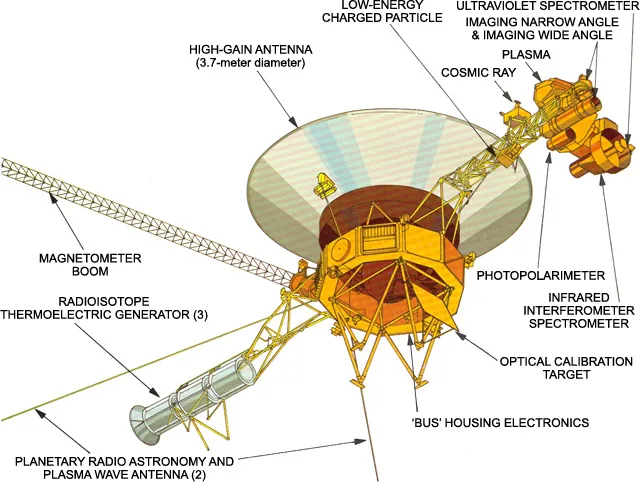
| Instrument | Voyager 1 | Voyager 2 |
|---|---|---|
| Cosmic Ray Subsystem (CRS) | Off to save power (Feb 25th, 2025) | On |
| Low-Energy Charged Particles (LECP) | Off to save power (April 17th, 2026) | Off to save power (March 24th, 2025) |
| Magnetometer (MAG) | On | On |
| Plasma Wave Subsystem (PWS) | On | On |
| Plasma Science (PLS) | Off because of degraded performance (Feb 1st, 2007) | Off to save power (Sept 26th, 2024) |
| Imaging Science Subsystem (ISS) | Wide-angle and narrow-angle cameras off to save power (Feb 14th, 1990) | Wide-angle and narrow-angle cameras off to save power (Oct 10th and Dec 5th, 1989) |
| Infared Interferometer Spectrometer and Radiometer (IRIS) | Off to save power (June 3rd, 1998) | Off to save power (Feb 1st, 2007) |
| Photopolarimeter Subsystem (PPS) | Off because of degraded performance (Jan 29th, 1980) | Off because of degraded performance (April 3rd, 1991) |
| Planetary Radio Astronomy (PRA) | Off to save power (Jan 15th, 2008) | Off to save power (Feb 21st, 2008) |
| Ultraviolet Spectrometer (UVS) | Off to save power (April 19th, 2016) | Off to save power (Nov 12th, 1998) |
Leave a Reply